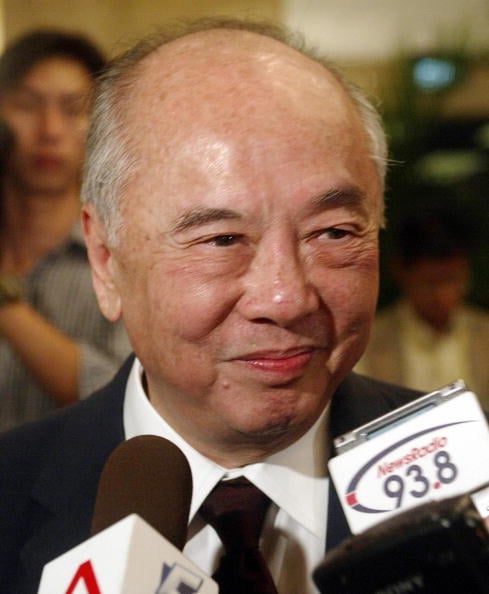
When discussing the titans of Singaporean finance, the name Wee Cho Yaw invariably rises to the forefront. A banking magnate whose strategic vision shaped one of Southeast Asia’s largest financial institutions, Wee Cho Yaw's influence extends far beyond the boardroom. His remarkable journey, marked by prudent investments and astute leadership, has culminated in a formidable fortune, making the question of Wee Cho Yaw net worth a topic of significant interest. This comprehensive article delves into the sources of his immense wealth, tracing his path from a family banking legacy to becoming a multifaceted billionaire icon.
The Formidable Fortune: Unpacking Wee Cho Yaw's Net Worth
At the heart of Wee Cho Yaw's legacy is his staggering wealth. Estimated at over $8 billion, his net worth places him among Singapore's most affluent individuals. This impressive figure is not merely a testament to his long career in banking but reflects a lifetime of strategic decision-making and diversification across various lucrative sectors.
A Billionaire's Benchmark: The Estimated Wealth
While specific figures can fluctuate with market dynamics and investment valuations, estimates consistently place Wee Cho Yaw's net worth in the multi-billion-dollar range. This wealth is a direct outcome of his pioneering work in the financial industry and his family's extensive business empire. It underscores the profound impact he has had on Singapore's economic landscape, transforming a local bank into a regional powerhouse and establishing a diversified portfolio of assets that continues to generate substantial returns.
The Genesis of a Banking Empire: UOB's Foundation
Wee Cho Yaw's journey began not from scratch, but from a strong familial foundation in finance. Born in 1929 in Fujian, China, he moved to Singapore as an infant, growing up immersed in the world of banking. His father, Wee Kheng Chiang, founded the United Overseas Bank (UOB) in 1935, initially known as the United Chinese Bank. This familial connection provided Wee Cho Yaw with an unparalleled understanding of the financial sector from an early age, equipping him with the knowledge and foresight that would later define his career.
After completing his education, including studies at The Chinese Secondary School and Chung Cheng Secondary School, Wee Cho Yaw formally joined the family business. His official entry onto the Board of Directors of United Chinese Bank in 1958 marked the beginning of a transformative era, setting the stage for decades of unparalleled growth and expansion.
Architect of Growth: Wee Cho Yaw's Transformative Leadership at UOB
Wee Cho Yaw’s tenure at UOB is synonymous with aggressive expansion and strategic consolidation, cementing his reputation as a visionary leader who profoundly impacted the institution's trajectory.
From Boardroom to CEO: Decades of Strategic Vision
Just two years after joining the board, Wee Cho Yaw was appointed Managing Director in 1960. His rise through the ranks continued steadfastly, culminating in his appointment as CEO in 1974, when his father, Wee Kheng Chiang, chose to retire. For over three decades, until 2007, he served as CEO, spearheading an era of remarkable growth and transformation for UOB. His leadership style, characterized by a pragmatic, cautious, yet ambitious approach, was instrumental in navigating the bank through various economic cycles and geopolitical shifts.
Under his stewardship, UOB embarked on a series of strategic acquisitions and expansions, not just within Singapore but across Southeast Asia. He was known for his keen eye for opportunities and his ability to integrate acquired entities seamlessly, strengthening UOB’s market position. This period of dynamic growth saw UOB evolve from a local player into a regional financial services giant, offering a comprehensive suite of banking and financial solutions to millions. To delve deeper into the strategic maneuvers and pivotal moments that defined UOB's ascent under his leadership, explore UOB's Rise: Wee Cho Yaw's Journey to Financial Dominance.
Expanding Horizons: UOB's Regional Dominance
Wee Cho Yaw's vision for UOB was never confined to Singapore's shores. He systematically steered the bank towards regional dominance, establishing a robust presence in key markets across Southeast Asia and beyond. This expansion was not just about increasing UOB's geographical footprint but also about diversifying its revenue streams and building a resilient financial ecosystem. His emphasis on establishing long-term client relationships and prudent risk management ensured that UOB's growth was sustainable and stable, distinguishing it in a competitive banking landscape. This strategic foresight has undeniably contributed significantly to Wee Cho Yaw's net worth.
Beyond Banking: Diversifying a Billion-Dollar Legacy
While UOB remains the cornerstone of his financial empire, Wee Cho Yaw's sagacity extended to strategic investments outside the traditional banking sector. These diversifications have been crucial in fortifying his family's wealth and demonstrating a sophisticated understanding of market opportunities.
Strategic Land Holdings: The Kheng Leong Connection
A significant component of the Wee family's wealth is tied to their extensive land and property holdings through Kheng Leong Company. This privately held property development and investment group has a long history in Singapore, dating back to 1949. Under Wee Cho Yaw's guidance, Kheng Leong amassed a substantial portfolio of residential, commercial, and industrial properties. Investing in real estate, particularly in a land-scarce and rapidly developing nation like Singapore, proved to be an exceptionally shrewd move, providing a stable and appreciating asset base that complements the more dynamic nature of banking. These property assets represent a substantial, tangible component of Wee Cho Yaw's net worth.
From Finance to Pharmaceuticals: The Haw Par Stake
Adding another intriguing layer to his diversified portfolio is the Wee family's significant stake in Haw Par Corporation. The family owns nearly 25% of this diversified conglomerate, which is perhaps best known globally as the manufacturer of the iconic pain-relieving ointment, "Tiger Balm." This investment highlights Wee Cho Yaw's willingness to look beyond conventional financial services and identify value in established consumer brands. Haw Par’s robust performance and steady revenue from its various businesses, including healthcare, leisure, and property, provide another stream of income and contribute substantially to the overall family wealth. For an in-depth look at these crucial non-banking ventures and their contribution to his empire, refer to Beyond UOB: Wee Cho Yaw's Strategic Land & Haw Par Investments.
Other Ventures and Influence: UIC and More
Beyond UOB, Kheng Leong, and Haw Par, Wee Cho Yaw also held significant positions in other major enterprises, including serving as Chairman of United Industrial Corporation (UIC). His involvement in multiple key industries underscores his broad influence across Singapore's business landscape. These strategic affiliations and leadership roles allowed for a network of synergistic opportunities, further solidifying the foundation of his immense wealth and impact.
A Legacy of Distinction: Awards, Philosophy, and Family Succession
Wee Cho Yaw's impact is not just measured in billions but also in the profound recognition he received for his contributions to both the economy and society.
Honors and Accolades: Recognizing a Titan
Throughout his illustrious career, Wee Cho Yaw garnered numerous accolades that reflect his significant contributions. In 1971, the Singapore government recognized his public service with the prestigious Public Service Star. His business acumen was further celebrated when he was awarded the Singapore Businessman of the Year twice, in 1990 and again in 2001, an unprecedented feat at the time. The University of Singapore bestowed an honorary doctorate upon him in 2008, acknowledging his lasting influence on the nation's financial and educational spheres. These honors underscore the immense respect he commanded, not just as a financial leader but as a nation-builder.
The Wee Family Dynasty: Passing the Torch
In 2007, Wee Cho Yaw stepped down as CEO of UOB, passing the torch to his son, Wee Ee Chong, who assumed the role. This smooth succession demonstrated the family's commitment to the long-term stewardship of the banking empire and ensured continuity in leadership. Even after stepping down as CEO, Wee Cho Yaw continued to serve as Chairman and later as Chairman Emeritus and Honorary Adviser, maintaining his profound influence and providing invaluable counsel to the institution he meticulously built. This dynastic approach to leadership is a hallmark of many successful Asian family businesses and a key factor in the sustained growth of the Wee family's wealth.
A Prudent Visionary: Management Philosophy
Wee Cho Yaw was renowned for his cautious management style, which emphasized stability, prudence, and an unwavering focus on long-term growth over short-term gains. This philosophy, deeply ingrained in UOB's culture, allowed the bank to navigate economic downturns with resilience and capitalize on opportunities strategically. He prioritized building strong relationships with clients and stakeholders, believing that trust was the ultimate currency in banking. This disciplined approach not only ensured the enduring success of UOB but also became a foundational principle that contributed significantly to the enduring strength of Wee Cho Yaw's net worth and the family's diversified empire.
Conclusion
Wee Cho Yaw's net worth is a compelling narrative of ambition, strategic foresight, and unwavering dedication. From inheriting a family banking business to transforming it into a regional financial juggernaut, and shrewdly diversifying into property and consumer goods, his legacy is multi-faceted and profound. He was more than just a billionaire; he was an architect of Singapore's financial landscape, a prudent visionary whose impact will resonate for generations. His journey serves as a powerful testament to the potent combination of strategic vision, disciplined execution, and a long-term perspective in wealth creation and national development.
